
Employee Onboarding
Onboarding is the process of integrating new hires into an organization, from pre-joining through their first months, to reach productivity faster.
Employee onboarding is the structured process of welcoming and equipping new hires, covering paperwork, systems access, role training, culture and early goals. Effective onboarding extends beyond day one into the first 90 days and beyond.
Strong onboarding improves time-to-productivity, engagement and retention, while weak onboarding is a common cause of early attrition. Automation and personalization make it consistent at scale.
How Employee Onboarding works in Violetinfo.ai
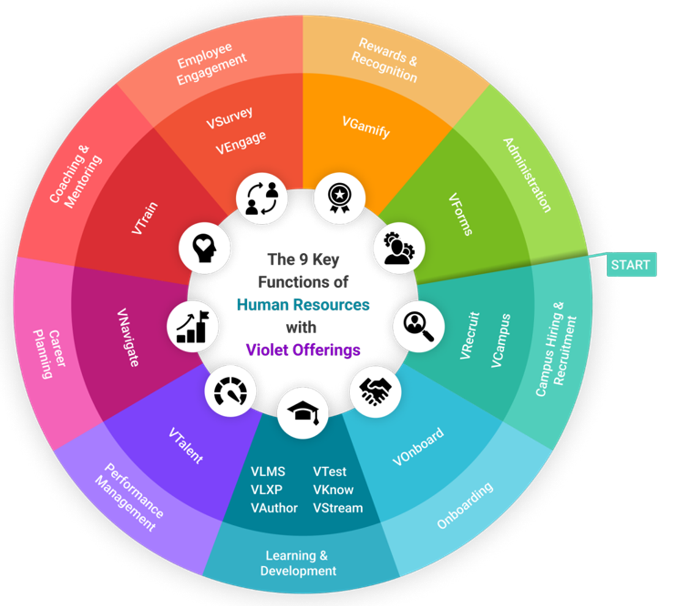
VOnboard streamlines onboarding with intelligent workflows, personalized journeys and automated compliance tracking, so every new hire gets a consistent, fast start.
The stages of a complete onboarding journey
Onboarding usually runs across four stages. Pre-boarding covers the time between offer acceptance and the first day: documents, equipment, system access and a welcome message so the new hire is not starting from zero. Orientation covers the first days, introducing the organization's purpose, policies, tools and key people.
Role integration follows over the first weeks, with job-specific training, early tasks and regular check-ins with the manager. The final stage, often running to the end of the third month or longer, focuses on performance expectations, feedback and the new hire's sense of belonging. Treating these as one connected journey, rather than a single induction day, is what separates structured onboarding from paperwork.
Who owns onboarding and why coordination is hard
Onboarding involves HR, hiring managers, IT, facilities, payroll, compliance and often a buddy or peer mentor. Each owns a piece, and gaps appear when hand-offs are informal: a laptop arrives late, an account is not created, or mandatory training is missed until an audit catches it.
Clear task ownership, due dates and visibility for everyone involved reduce these gaps. Managers in particular need simple prompts for what to do each week, because their involvement has a large influence on how supported a new hire feels.
Common onboarding mistakes and how to avoid them
One common mistake is information overload in the first week, with long policy sessions that new hires cannot absorb. Spreading content over time and linking it to tasks the person is actually doing helps it stick. Another is a one-size-fits-all program that ignores differences between roles, locations and remote or frontline workers.
Organizations also often skip measurement. Tracking completion of onboarding tasks, time to first milestones, new hire feedback and early attrition helps teams see what works and improve it. VOnboard supports this with intelligent workflows, personalized journeys and automated compliance tracking.
Adapting onboarding for remote, hybrid and frontline hires
Not every new hire starts at a desk in a head office. Remote employees need equipment shipped in advance, virtual introductions and deliberate ways to build relationships with colleagues they may rarely meet. Frontline hires in stores, plants or field roles often need safety and job training first, delivered on mobile devices in short sessions that fit around shifts.
A good onboarding design keeps a common core, such as values, policies and essential compliance training, and then varies the rest by role, location and work pattern. This keeps the experience consistent without forcing every person through content that does not apply to them.
Frequently asked questions
How long should employee onboarding last?
Structured onboarding commonly lasts at least 90 days, and many organizations extend it to six months or a year for complex roles. The first day and first week matter, but the goal is reaching steady productivity and engagement, which takes longer.
What is the difference between onboarding and orientation?
Orientation is a short event, usually in the first days, that introduces the organization, while onboarding is the longer process of integrating a new hire into their role and team. Orientation is one part of onboarding.
What is pre-boarding?
Pre-boarding is the period between a candidate accepting an offer and their first day, used to complete paperwork, prepare equipment and access, and keep the new hire engaged. Good pre-boarding means people arrive ready to start rather than spending day one on forms.