
Deskless Workforce
The deskless workforce is the majority of workers who do their jobs away from a desk or computer, on factory floors, in the field, in stores or on the move.
The deskless workforce includes frontline and blue-collar workers (manufacturing operators, field technicians, retail and hospitality staff, drivers and healthcare workers) who rarely use a corporate computer. Globally they are the majority of employees yet are often underserved by traditional learning systems.
Reaching them requires mobile-first, offline-capable, often vernacular and low-literacy-friendly learning designed for shared devices and short attention windows.
How Deskless Workforce works in Violetinfo.ai
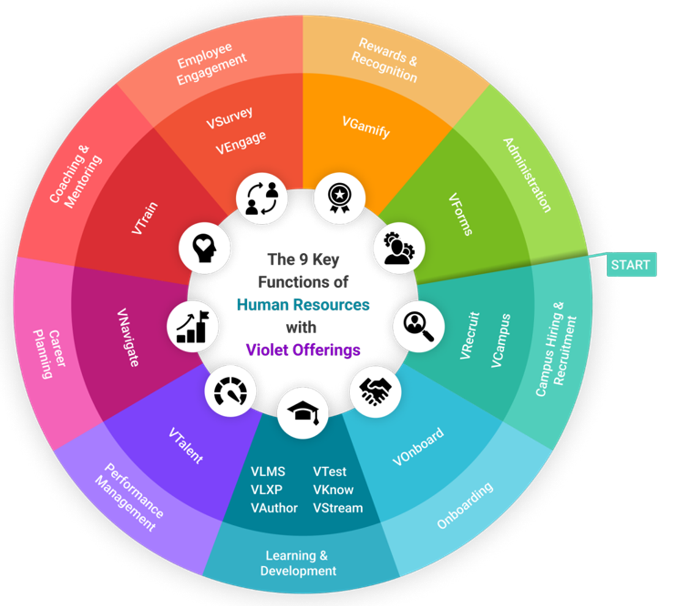
VioletLMS is built for the deskless workforce: mobile-first, offline, vernacular and voice-enabled learning that reaches frontline and blue-collar workers.
Why deskless workers are often left out of learning
Most corporate learning was designed for people who sit at a computer with an email account and a calendar. Deskless workers often have none of these. They may not have a company login, they work in shifts, and their working time is tied to production lines, customer queues or delivery routes. Asking them to leave the floor for a long classroom session or a desktop course is costly and frequently unrealistic.
The result is that deskless employees can receive less training than office staff, even though their roles often carry higher safety, quality and customer experience risk. Closing that gap is a practical concern for manufacturing, retail, hospitality, logistics, healthcare and field service organizations around the world.
Design principles for deskless learning
Learning for deskless workers works best when it fits into short gaps in the working day. Modules of a few minutes, delivered on a personal or shared mobile device, are easier to complete than long courses. Offline access matters in plants, warehouses and remote sites with weak connectivity, with progress syncing when a connection returns.
Language and literacy also need attention. Content in the worker's own language, with visuals, video and voice narration rather than dense text, makes learning accessible to more people. Simple sign-in methods, such as a phone number or employee ID instead of an email address, remove a common barrier to access. Short scenarios that show familiar equipment and settings also help people relate the lesson to their own job.
Measuring learning for deskless teams
Completion rates alone say little about whether frontline training is working. Useful measures connect learning to the outcomes deskless roles are responsible for, such as safety incidents, quality defects, customer complaints, time for new hires to work independently and first-time fix rates in field service.
Short knowledge checks and on-the-job observations by supervisors add evidence that people can apply what they learned. Comparing these measures across sites or shifts helps organizations see where extra support or different content is needed.
Supervisors as the link to frontline learning
Frontline supervisors and shift leads have a strong influence on whether deskless workers actually complete training. Giving them simple views of who is due, short toolbox talk material and the ability to record on-the-job observations connects digital learning to the real work. VioletLMS is built for this audience with mobile-first, offline, vernacular and voice-enabled learning.
Frequently asked questions
What jobs are part of the deskless workforce?
The deskless workforce includes jobs done away from a desk, such as factory operators, warehouse staff, retail associates, hospitality workers, drivers, field technicians, construction workers and many healthcare staff. These roles are common across almost every industry and country.
How do you train deskless employees effectively?
Train deskless employees with short, mobile-first lessons they can complete during natural breaks in their shift, in their own language. Offline access, visual and voice content, and supervisor support all help raise completion and understanding.
What is the difference between deskless and frontline workers?
The terms overlap heavily: deskless describes where people work (away from a desk), while frontline describes their role (directly serving customers or producing goods). Most frontline workers are deskless, but not every deskless worker is customer-facing.