
Adaptive Learning
Adaptive learning uses technology to adjust content, pace and difficulty in real time based on each learner’s performance.
Adaptive learning personalizes the path through content by responding to how a learner performs, accelerating where they are strong, reinforcing where they struggle. It aims to give each person the right challenge at the right time.
Powered by data and AI, adaptive systems improve efficiency and outcomes by avoiding one-size-fits-all sequences, particularly valuable in assessments and skill-building.
How Adaptive Learning works in Violetinfo.ai
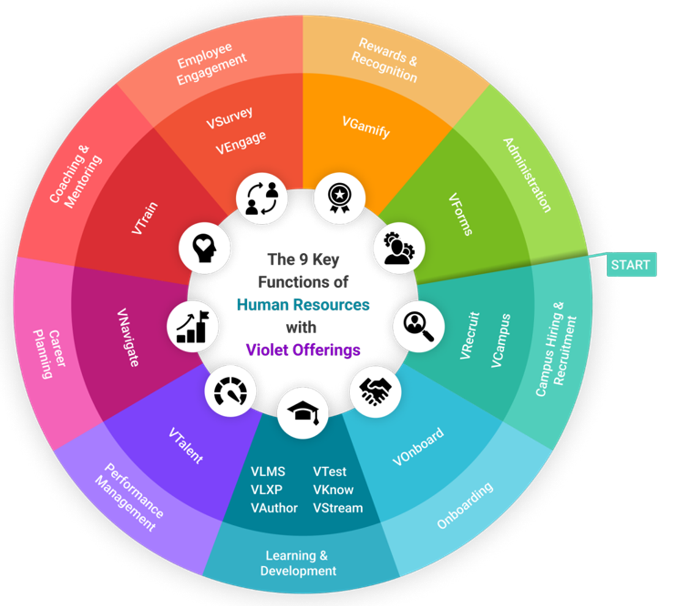
VTest applies adaptive difficulty to assessments, while VioletLXP adapts recommendations to each learner’s skills, role and progress.
How adaptive learning systems make decisions
An adaptive system continuously collects signals about the learner: answers to questions, time taken, number of attempts, and sometimes self-rated confidence. It uses those signals to decide what to show next, whether that is a harder question, a short remedial explanation, or permission to skip content the learner has already mastered.
The logic ranges from simple to sophisticated. Rules-based branching follows paths that designers set in advance, such as sending anyone who misses a question to a refresher. Algorithmic approaches estimate a learner's ability from all their responses. In assessment, computerized adaptive testing commonly uses item response theory to choose each next question based on that estimate, which can measure ability with fewer questions than a fixed test.
Where adaptive learning adds the most value in enterprises
Adaptive learning is most useful when learners start from very different levels. Experienced employees taking an annual refresher can demonstrate what they know and move on, while newer staff receive the full explanation. That reduces time spent on content people already know without lowering the standard.
It also suits certification preparation, product knowledge and skills assessment, where precise measurement matters. On Violetinfo.ai, VTest applies adaptive difficulty to assessments, while VioletLXP adapts recommendations to each learner's skills, role and progress.
What you need before adaptive learning will work
Adaptive systems are only as good as the structure underneath them. Content must be broken into small units, each tied to a clear objective, so the system can choose between them. Assessments need enough questions per objective, at different difficulty levels, for the system to vary what it asks.
Clear competency definitions are also essential, because the system needs to know what mastery looks like. Organizations that skip this groundwork often end up with branching that feels random to learners.
Adaptive, personalized and AI-driven learning: how the terms differ
Personalized learning is the broad idea of tailoring learning to the individual, for example by role, goals or interests. Adaptive learning is a specific form of personalization that responds to performance in real time. AI is one way of powering either, but adaptive learning can also be built with designer-defined rules.
In practice, the three often work together: an AI engine personalizes which courses a learner sees, and adaptive logic inside each course or assessment adjusts the difficulty as that learner answers.
Frequently asked questions
What is the difference between adaptive learning and personalized learning?
Adaptive learning changes content or difficulty in response to how a learner performs as they go, while personalized learning is the broader practice of tailoring learning to role, goals or preferences. All adaptive learning is personalized, but not all personalized learning is adaptive.
Can adaptive learning be used for compliance training?
Yes, adaptive learning can be used for compliance training, as long as the record shows that every required objective was either taught or tested. This lets experienced employees prove their knowledge and skip familiar material while the evidence still holds up in an audit.
What do you need to get started with adaptive learning?
You need content broken into objective-level units and assessment questions mapped to those objectives. Without that structure, an adaptive system has nothing meaningful to choose between, so the groundwork in content design comes before the technology.