
LMS vs Workforce Enablement Platform
An LMS (learning management system) delivers, tracks and certifies formal training, while a workforce enablement platform equips employees in the flow of work with knowledge, SOPs, checklists, communication and on-the-job support; an LMS builds capability, an enablement platform helps people apply it day to day.
What each one does
An LMS is built around courses and records: assigning training, launching content, tracking completions and scores, issuing certificates and proving compliance. It answers the question “has this person been trained?”.
A workforce enablement platform is built around the working day: quick access to the right SOP or product information, task checklists, team communication, performance support and feedback. It answers “can this person do the job right now?”. Sales enablement is one well-known version for sales teams; frontline enablement applies the same idea to stores, plants and field operations.
Key differences
- •Purpose: the LMS develops and certifies skills; the enablement platform supports execution on the job.
- •Content: the LMS holds structured courses and assessments; enablement holds short reference content, SOPs, checklists and updates.
- •When it is used: LMS learning is scheduled or assigned; enablement is used in the moment of need.
- •Measurement: the LMS reports completion, scores and certification; enablement reports usage, task completion and operational results.
- •Compliance: the LMS is the system of record for mandatory training; enablement tools usually are not.
Do you need both?
Most organisations with large frontline or field teams need both capabilities: formal training to get people competent and certified, and in-the-flow support to keep them consistent once they are working. Running them as separate tools means two logins, two content libraries and no link between training and performance.
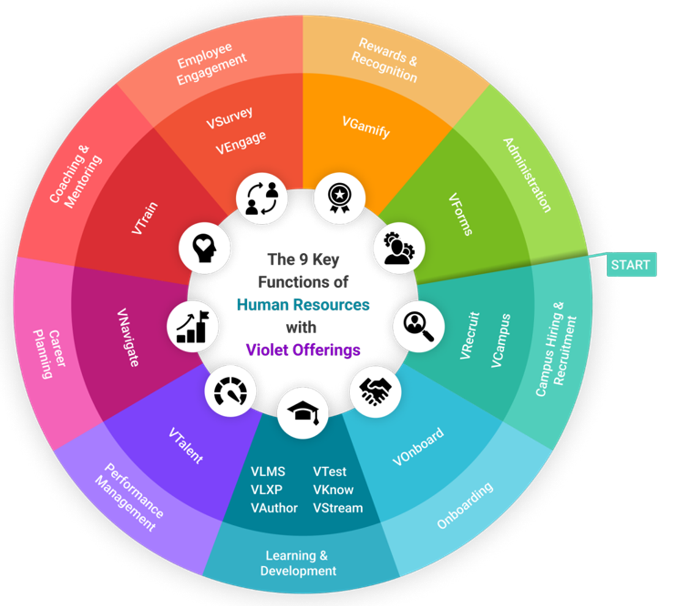
The alternative is one platform that covers both. The Violetinfo.ai platform combines VioletLMS for formal training and compliance, VioletLXP for personalised learning, VKnow for knowledge and SOP access, and operational checklists and audits, on one mobile app.
Frequently asked questions
- What is the difference between an LMS and a workforce enablement platform?
- An LMS delivers, tracks and certifies formal training. A workforce enablement platform supports employees during their work with knowledge, SOPs, checklists, communication and performance support. The LMS builds capability; enablement helps people apply it.
- What is a workforce enablement platform?
- A workforce enablement platform is software that gives employees what they need to do their job well in the moment: quick access to information and SOPs, task checklists, updates from head office, coaching and feedback, usually on a mobile app.
- Can an LMS replace a workforce enablement platform?
- A traditional LMS usually cannot, because it is built around courses and records rather than in-the-moment support. Platforms that combine an LMS with knowledge management, checklists and communication can cover both needs in one place.
- Is sales enablement the same as workforce enablement?
- Sales enablement is a type of workforce enablement focused on sales teams: content, playbooks, training and coaching for selling. Workforce enablement applies the same approach to every role, including frontline, operations and service staff.
Related
Training and on-the-job support in one app
See how the Violetinfo.ai platform combines LMS, LXP, knowledge access and checklists for frontline and desk teams alike.
Book a demo