
Learning Journey
A learning journey is a structured, sequenced set of learning experiences designed to move a learner toward a defined goal over time.
A learning journey arranges courses, activities and milestones into a logical progression rather than a single isolated course. It often spans multiple formats and time periods, reflecting how skills build cumulatively toward a role, competency or outcome.
Designing journeys helps connect onboarding, role-based training and ongoing development into a coherent path. Mapping each step to objectives makes progress visible and helps learners understand why each activity matters.
How Learning Journey works in Violetinfo.ai
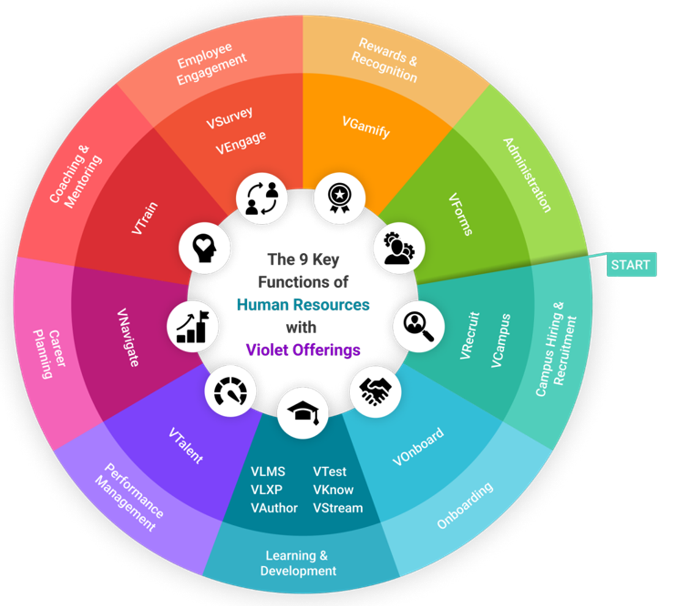
VioletLXP composes learning journeys from sequenced content and recommendations, aligning each step with competencies and career paths.
Learning journey meaning, in plain terms
A learning journey is the route a learner takes from where they are today to a defined goal, such as becoming productive in a new role, earning a certification or getting ready for a promotion. Instead of handing someone one course, it lays out a series of steps in a deliberate order, with each step building on the one before it.
The steps are usually a mix of formats: short e-learning modules, videos, live sessions, on-the-job tasks, coaching conversations and assessments. Milestones along the way show the learner and their manager how far they have come and what is still left.
Learning journey examples
New-hire onboarding: a 30-60-90 day journey that starts with company and policy basics, moves into role skills and product knowledge, and ends with a manager sign-off that the person is fully productive.
Frontline or store staff: a mobile-first journey of short daily lessons, quick quizzes and supervisor checklists, so a new team member can work a shift safely within days rather than weeks.
Leadership development: a months-long journey for first-time managers combining self-paced modules, cohort workshops, peer discussions and real projects, with check-ins at each stage.
Compliance: an annual journey that assigns required courses by role and location, sends reminders, and records completions and scores for audits.
How to design a learning journey
Start from the outcome: write down what the learner should be able to do at the end, and how you will know. Then work backwards to the skills and knowledge needed, and order them from foundational to advanced.
Pick the right format for each step rather than defaulting to courses: practice and feedback for skills, short content for facts, conversations for judgement. Space the steps out over time so learning is reinforced, and add checkpoints where progress is assessed before the learner moves on.
Finally, measure the journey as a whole: completion of each stage, assessment results, time to proficiency and, where possible, the business metric the journey was meant to move.
Learning journey vs learning path vs curriculum
The terms overlap and are often used interchangeably. A curriculum is usually the list of content to be covered. A learning path is an ordered sequence of courses, typically inside one platform. A learning journey is the broadest of the three: it covers the full experience over time, including on-the-job practice, social learning, coaching and milestones, not only formal courses.
What a learning journey platform does
A learning journey platform, usually an LMS or LXP, lets L&D teams build these sequences once and assign them automatically by role, team or event such as a new hire joining. It unlocks steps in order, sends nudges when someone falls behind, mixes content types in one flow and reports progress for each learner and cohort.
In Violetinfo.ai, VioletLMS runs structured, assigned journeys such as onboarding and compliance, and VioletLXP adds personalised recommendations so each journey can adapt to the learner's role, skills and career goals.
Frequently asked questions
What is the meaning of a learning journey?
A learning journey is a planned sequence of learning experiences, such as courses, practice, coaching and assessments, that takes a learner from their current level to a defined goal over a period of time.
What is an example of a learning journey?
A common example is new-hire onboarding: a 30-60-90 day sequence that moves from company basics to role skills to a final manager sign-off that the employee is fully productive.
What is the difference between a learning journey and a learning path?
A learning path is usually an ordered set of courses in one system. A learning journey is broader and includes on-the-job practice, social learning, coaching and milestones across the whole experience.
Which platform is used to build learning journeys?
Learning journeys are typically built in an LMS or an LXP, which can assign journeys by role, release steps in order, send reminders and track progress for each learner.