
Hotel Training Doesn't Fail in the Classroom. It Fails at the 6 AM Shift Change.
Hospitality is one of the few industries where the product and the employee are inseparable. A guest cannot evaluate a room, a meal, or a check-in without evaluating the person who delivered it. That makes consistent training less a development initiative and more a core operating system. Yet most hotel groups still deliver it the way they did twenty years ago: a classroom induction, a binder of SOPs, and a senior colleague who shows you the ropes when they have time.
That model worked when properties were few, teams were stable, and standards lived in the heads of long-tenured managers. It breaks down when a group runs dozens of properties across cities, hires heavily around festive and wedding seasons, and loses a large share of its frontline each year. The classroom was never the weak point. The weak point is everything that happens after the classroom ends.
The Hospitality Workforce Doesn't Train Like Everyone Else
Before choosing a platform or a programme, it helps to be honest about the learner. A hotel workforce has characteristics that make standard corporate learning a poor fit.
Teams are on their feet across rotating shifts, including early mornings and late nights, so there is no common hour when everyone is free. Roles are highly varied, from front office and housekeeping to food and beverage, banquets, engineering, and security, and each needs different knowledge. Seasonal and event-driven hiring means a property can add dozens of people within weeks and need them guest-ready almost immediately. Staff often speak several languages and learn better from short demonstrations than from long documents. And most of them do not sit at a desk with a company laptop. They hold a phone, if they have a minute at all.
A learning approach that ignores these conditions will report low completion and blame motivation. The more accurate diagnosis is that the training was designed for a schedule and a device the workforce doesn't have.
Where Hotel Training Quietly Breaks Down
Across properties of every size, the same failure points tend to appear.
Standards drift between properties. When SOPs are delivered through local trainers, every property develops its own interpretation. A check-in script, a turndown routine, or a complaint-handling approach slowly diverges from the brand standard, and no one notices until guest reviews reveal the inconsistency.
Onboarding depends on who is available. A new housekeeper's first week is shaped by which supervisor happens to have time. Some new joiners get structured coaching. Others learn by watching, and what they pick up includes the shortcuts.
Seasonal surges overwhelm manual induction. Training a handful of hires a month is manageable. Training a large seasonal intake in days, across several properties, is not. Quality is usually the first thing sacrificed.
Compliance is treated as a checkbox. Food safety, fire and emergency procedures, guest data handling, and workplace conduct are all required, and all easy to record as "done" without confirming anyone actually understood them. When an incident occurs, the question is not whether training was assigned, but whether it can be shown to have worked.
Consistency Is a Delivery Problem, Not a Content Problem
Most hotel groups already have good content. The brand standards exist, the SOPs are written, and the service philosophy is documented. What they lack is a reliable way to put that content in front of every employee, in a form they can absorb, at a moment they can actually use it.
This is why the shift from classroom-first to platform-first matters. When a standard is built once and delivered digitally, every property receives the same version on the same day. When it is updated, because a menu changes, a safety protocol is revised, or a new loyalty process launches, the update reaches everyone at once rather than cascading through trainers who each interpret it slightly differently.
Short, role-specific lessons are the practical unit here. A ten-minute module on handling a late check-out request, a two-minute walkthrough of the bed-making standard, or a quick refresher on allergen handling can be completed in the gap between tasks, on a phone, in the employee's own language. Small, repeatable doses beat a single long induction that fades from memory within a fortnight.
Onboarding That Gets a New Joiner Guest-Ready Faster
The first days of employment decide a great deal. A new joiner who feels prepared stays and performs. One who feels lost is already looking elsewhere. In an industry with high frontline attrition, speeding up and standardising early training is one of the most direct levers an operations team has.
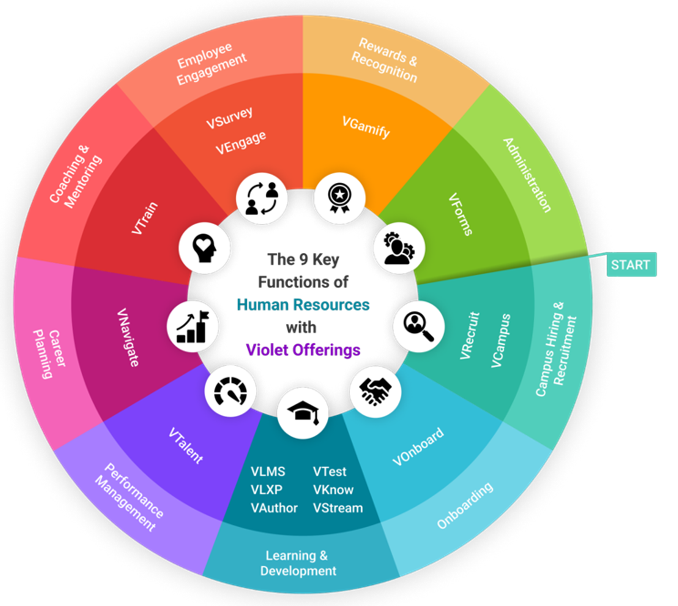
A structured onboarding path gives every new hire the same foundation regardless of property or supervisor: brand and service standards, role-specific procedures, safety and compliance essentials, and the soft skills that define guest interaction. Managers then spend their time coaching and observing rather than repeating the same basics. This is the thinking behind V-Onboard, which helps organisations move new joiners from offer to productive with a consistent, trackable programme. For groups hiring in bulk before peak season, that predictability is often worth more than any single piece of content.
Building and Updating Courses at the Speed of Operations
Hospitality changes constantly. Seasonal menus, new property openings, revised hygiene norms, and updated brand guidelines all require fresh training, and they rarely give L&D teams months of lead time. If building a course takes a quarter, the content is stale before it ships.
This is where authoring speed becomes an operational concern. With VAuthor, teams can turn existing SOPs, presentations, and documents into mobile-ready microlearning without a lengthy production cycle, so a new standard can reach the floor within days of being approved. The aim is not to produce more content. It is to keep the content on the floor in step with the business.
Proving It Worked: Compliance and Audit Readiness
Food safety, fire preparedness, guest privacy, and workplace conduct are not optional in hospitality, and the consequences of a lapse are reputational as well as regulatory. For India and GCC operators, data protection expectations now extend to how guest information is handled at the front desk, which makes training on it a real obligation rather than a formality.
What leadership and auditors increasingly want is evidence: who completed which module, when, whether they passed an assessment, and which properties are behind. A platform that records this automatically turns audit preparation from a scramble into a report. VioletLMS is built to enterprise security standards, with ISO 27001, SOC 2 Type II, GDPR, and DPDPA certification, which matters when a hotel group is entrusting employee and training data to a vendor.
What to Look for in a Hospitality Training Platform
If you are evaluating options, a few questions separate platforms that suit hotel operations from those that merely claim to. Can an employee start a lesson on a personal phone without a corporate email address? Does it support the languages your teams actually speak? Can a lesson be finished in a few minutes between tasks? Can you assign different paths by role and property, and see completion by property in one view? Can it work with limited connectivity in back-of-house areas? And can your team update content quickly without depending on a vendor or an agency?
The platform you choose should make the right behaviour the easy one for a housekeeper, a front-desk associate, or a banquet server, not just convenient for the head office. The same principles apply across other high-turnover, service-led sectors, such as quick-service restaurants, where speed to productivity is just as decisive. For a closer look at how this works for hotel groups, the hospitality solutions page sets out how VioletLMS is applied across properties, and the broader VioletLMS platform covers the capabilities underneath.
The Takeaway
Guests do not experience your training programme. They experience the person in front of them. Whether that person is confident, consistent, and well prepared is decided long before the guest arrives, in the first week of onboarding, in the short lessons completed between shifts, and in how quickly a changed standard reaches every property. Hotel groups that treat training as infrastructure rather than an event give their teams the same footing at six in the morning as at noon, in the flagship and in the smallest property. That consistency is what the brand promise actually rests on.
See How VioletLMS Works for Hotel Teams
Mobile-first, multilingual training that reaches every shift and every property, with onboarding paths and audit-ready records built in. Trusted by 150+ enterprises across 20+ countries.
Written by
VioletLMS Editorial
The editorial team at Violetinfo.ai, the AI-native enterprise HR-tech suite behind VioletLMS.
More Articles
Your Skills Gap Isn't a Content Problem. Here's How to Map, Measure and Close It.
Most skills-gap programmes buy more courses and wonder why capability does not move. Here is how to map the gaps that matter, measure them with evidence rather than completions, and close them in weeks instead of a 12-month programme.
High-Volume Hiring Isn't a Recruitment Problem. It's a Handoff Problem.
Enterprises hiring hundreds of people a month rarely lose them at the interview. They lose them in the gaps between offer, joining, onboarding and first training. Here is where the three handoffs break, what to measure instead of cost-per-hire, and what a connected recruit-to-productive flow looks like.